
Quality Engineering That Ensures Stability at Scale
Move beyond traditional testing. Build systems where quality is engineered into every layer—code, architecture, and release pipelines.
Quality Is Not a Phase—It’s an Engineering Discipline
- TechAIVV embeds quality engineering throughout the software delivery lifecycle by integrating automated validation, performance assurance, security verification, and continuous testing into development workflows. This approach shifts quality from reactive defect detection to proactive system reliability, enabling organizations to release software with greater confidence while reducing operational risk.
- Software quality is no longer achieved through end-of-cycle testing. As applications become distributed, cloud-native, and continuously deployed, quality must be engineered into every layer of the system—from architecture and code to infrastructure, integrations, and release pipelines.
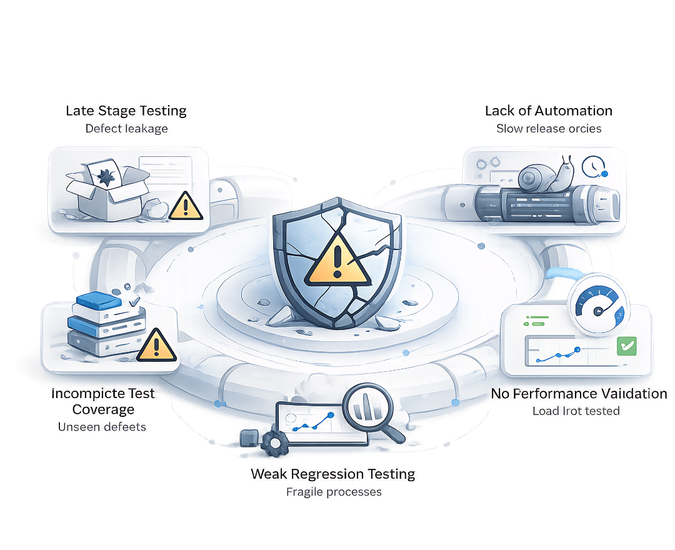
Common Gaps in Product Quality
Reality:
Quality issues are often systemic—not isolated bugs.
How We Engineer Quality Across Systems
TechAIVV integrates quality engineering into every stage of product development, creating software systems that remain reliable, scalable, and resilient throughout continuous delivery.
Continuous Release Validation
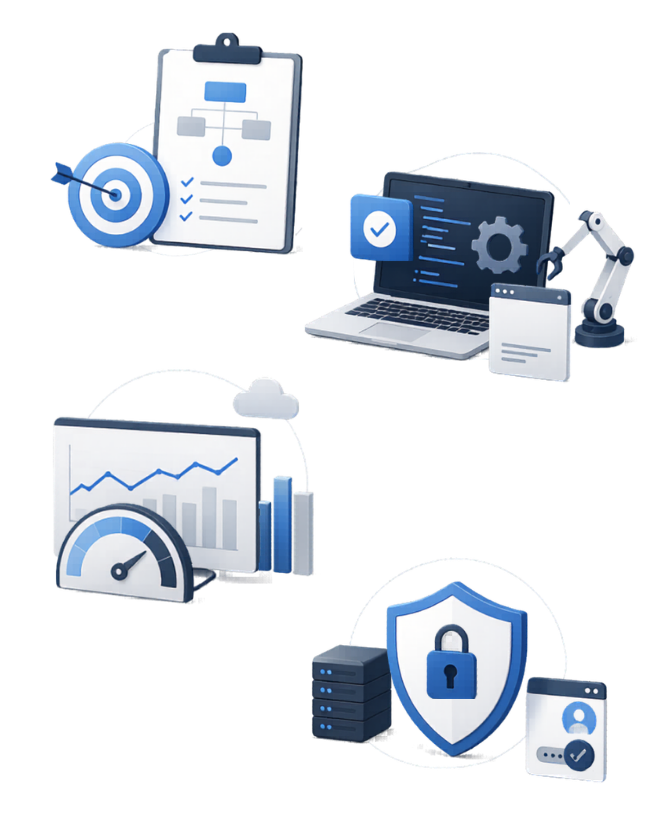
Defining comprehensive testing coverage across functional, non-functional, integration, and edge-case scenarios to ensure system reliability.
Automation & Performance Engineering
Building scalable automation frameworks while validating system performance under load, stress, and peak operational conditions.
Security & Compliance Validation
Ensuring applications meet enterprise security standards, compliance requirements, and risk management guidelines across environments.
Continuous Release Validation
Integrating continuous testing into CI/CD pipelines to enable faster releases, stable deployments, and consistent product quality.
OUR CORE SERVICES
Test Strategy & Planning
Test Automation
➤ API testing and automation
➤ Regression suite development Continuous testing in CI/CD
Performance & Load Testing
➤ Load testing (JMeter, k6)
➤ Stress and scalability testing
➤ Performance benchmarking
Security Testing
Our Approach to Engineering Quality
Rather than treating testing as the final stage of development, TechAIVV embeds quality throughout the engineering lifecycle.
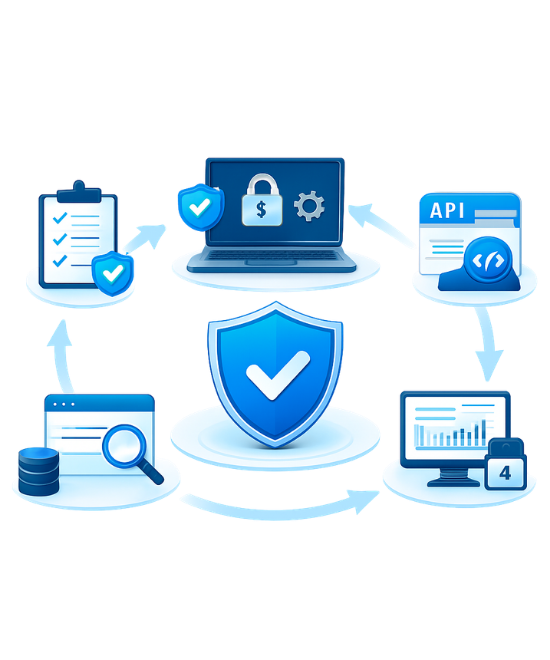
Instead of testing after development, we integrate quality checkpoints throughout the lifecycle:
This creates a system where defects are caught early—and rarely reach production.
High-Impact Use Cases
Our strategies are adaptable across industries, with tailored execution for each:

SaaS Platforms
Enterprise Systems
E-commerce Applications
APIs & Microservices
What You Gain

Frequently Asked Questions
What is quality engineering?
Unlike traditional testing, it focuses on preventing defects rather than just detecting them at the end.
It integrates quality practices from requirements to deployment.
Automation and continuous testing play a key role in maintaining consistency.
This ensures reliable, high-performance systems with fewer production issues.
How is quality engineering different from traditional testing?
Quality engineering embeds quality across every stage of development.
It emphasizes early detection, automation, and continuous validation.
This reduces dependency on manual testing and late-stage fixes.
The result is faster releases and more stable systems.
Why is quality engineering important?
It reduces production bugs and improves release confidence.
By identifying issues early, it minimizes rework and delays.
It also enhances user experience by maintaining system stability.
Overall, it enables faster and more efficient development cycles.
What role does automation play in quality engineering?
It reduces manual effort and increases testing accuracy.
Automated pipelines ensure consistent quality checks across environments.
This allows faster feedback and quicker issue resolution.
It also supports scalability in testing processes.
How do you ensure quality across the development lifecycle?
We define quality standards during the requirement phase.
Continuous testing is applied during development and deployment.
Monitoring and feedback loops ensure ongoing improvement.
This creates a consistent and reliable development process.
How does quality engineering improve release cycles?
Automation speeds up testing and validation processes.
This enables faster and more frequent releases.
It also ensures that each release meets quality standards.
The result is improved efficiency and reduced time-to-market.
How do you measure quality in software systems?
We also track release stability and user experience.
Continuous monitoring provides real-time insights into system health.
These metrics help identify areas for improvement.
This ensures that quality remains consistent over time.
Can quality engineering support agile development?
It supports continuous integration and continuous delivery (CI/CD).
Testing and validation are integrated into each sprint.
This ensures that quality is maintained even with rapid development cycles.
It enables faster and more reliable product iterations.
Let’s Collaborate with Us!
From an early stage start-up’s growth strategies to helping existing businesses, we have done it all! The results speak for themselves. Our services work.