
The Right Buyers Should Already Know Your Name
We build intent-driven demand generation systems that identify, engage, and convert high-value accounts before your competitors enter the buying cycle.
What’s Actually Broken in B2B Demand Generation

On the surface, everything looks active — campaigns are live, content is published, ads are running. But beneath that activity, the system is fragmented. Marketing generates MQLs that sales doesn’t trust. Outbound teams rely on static lists with no real intent signals.
High-value accounts — the ones that actually matter — remain disengaged because targeting lacks precision and personalization. Messaging is generic, timing is off, and outreach is disconnected from actual buyer behavior. There is no structured system to identify, prioritize, and engage accounts based on real signals
Demand Generation That Feeds Pipeline
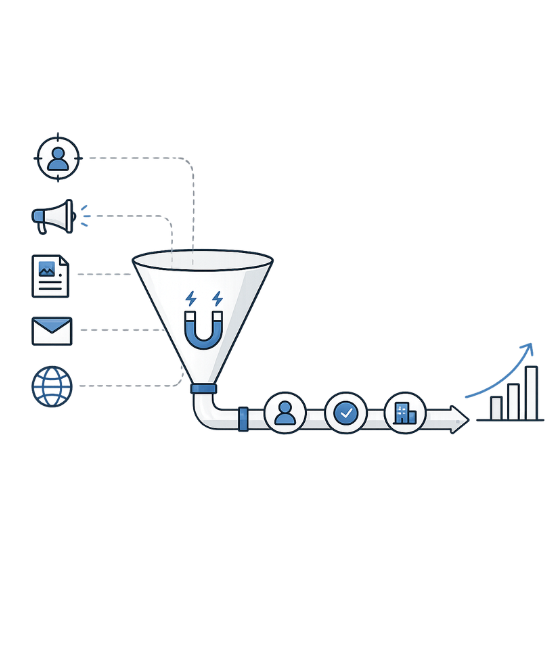
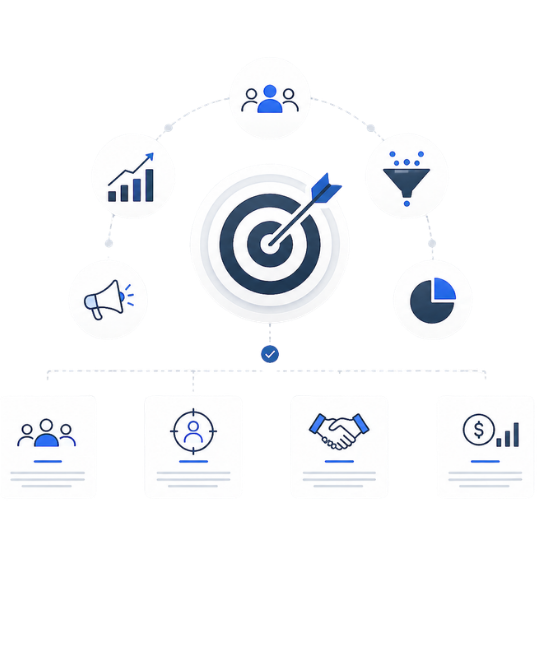
How Modern Demand Generation Actually Works
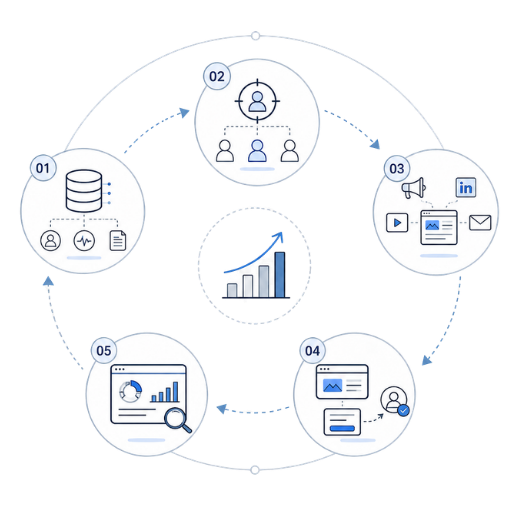
1. Data Layer
2. Targeting Layer
3. Execution Layer
4. Conversion Layer
5. Analytics Layer
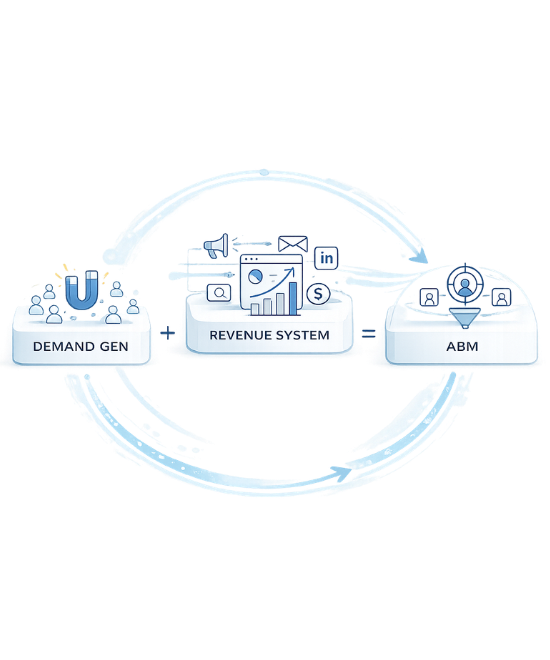
Demand Gen + ABM = Revenue System
Demand Generation creates market-wide awareness and inbound intent by reaching a broad but relevant audience across multiple channels. It leverages data, content, and paid media to attract potential buyers, educate them, and bring them into the funnel with initial interest and engagement.
What a Real Demand Engine Delivers
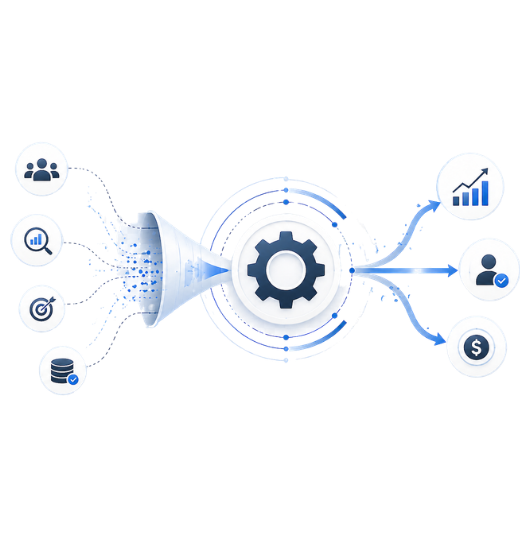
We Don’t Run Campaigns. We Engineer Demand Systems.
Most agencies focus on execution — launching ads, sending emails, and producing content. We focus on designing systems that consistently generate pipeline and drive revenue outcomes. Our approach is built around a buyer-centric GTM strategy rather than channel-centric execution, ensuring every touchpoint aligns with how real decisions are made. We leverage data-driven targeting instead of volume-based outreach, integrating CRM, marketing automation, and analytics into a unified demand engine. This creates a connected system where every action is measurable and optimized.
This ensures that marketing and sales operate on the same data, with clear alignment on pipeline quality and outcomes.We don’t optimize for clicks, impressions, or vanity metrics. We optimize for pipeline velocity, conversion efficiency, and revenue impact — building a demand engine that is predictable, scalable, and aligned with business growth.
Built for B2B Teams That Need Predictable Pipeline
Built for B2B teams that need a predictable, high-quality pipeline, not just more activity. If your current efforts aren’t reaching the right accounts or converting consistently, the issue is not effort it’s system design.
Frequently Asked Questions
What is demand generation in B2B?
It goes beyond lead generation by focusing on building long-term demand from accounts that match your Ideal Customer Profile (ICP).
Modern demand generation combines intent data, content, paid media, and outbound into a unified system.
The goal is not just traffic or leads, but qualified pipeline and revenue impact.
It creates continuous engagement across the buyer journey.
How is demand generation different from lead generation?
Demand generation focuses on building interest and engagement before capture, ensuring higher-quality leads.
It targets the right audience using data and intent signals.
Instead of short-term campaigns, it builds long-term pipeline systems.
The result is better conversion rates and stronger alignment with sales.
What channels are used in demand generation?
It also includes email marketing, webinars, and account-based marketing (ABM).
The key is not the channel itself but how they are integrated into a unified strategy.
Each channel supports different stages of the buyer journey.
This creates a consistent and multi-touch engagement experience.
What is intent-based demand generation?
This includes tracking content interactions, search behavior, and platform activity.
It allows targeting of high-intent accounts rather than broad audiences.
This improves efficiency and conversion rates.
It ensures outreach is timely, relevant, and effective.
How do you define an Ideal Customer Profile (ICP)?
It identifies companies that are most likely to convert, retain, and generate value.
We analyze past deals, customer data, and market trends to refine it.
A strong ICP ensures precise targeting and better pipeline quality.
It aligns marketing and sales on who to pursue.
How do demand generation and ABM work together?
ABM focuses on high-value accounts with personalized, targeted campaigns.
Together, they form a complete GTM strategy.
Demand gen fills the pipeline, while ABM improves conversion quality.
This combination ensures both scale and precision in pipeline generation.
How do you measure success in demand generation?
Metrics include qualified leads, sales-accepted leads (SALs), and pipeline velocity.
We also track engagement metrics and account-level activity.
The focus is on outcomes, not just activity.
This ensures alignment with business growth goals.
How long does it take to see results?
However, demand generation is a compounding system that improves over time.
Meaningful and predictable results typically develop over a few months.
Continuous optimization accelerates performance.
Consistency is key to long-term success.
Let’s Collaborate with Us!
From an early stage start-up’s growth strategies to helping existing businesses, we have done it all! The results speak for themselves. Our services work.