GTM Automation

WHAT WE BUILD

We Automate the GTM Motion — End to End

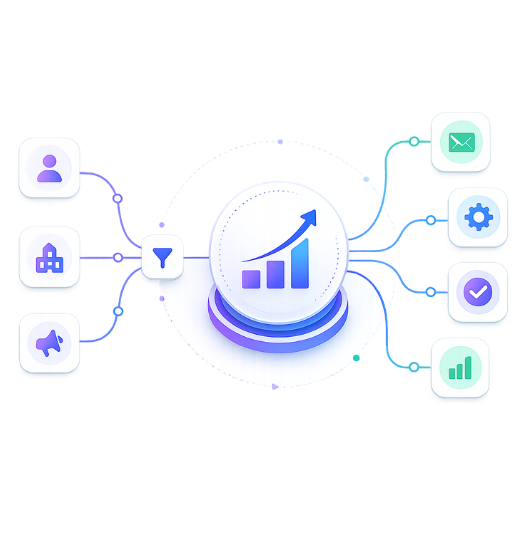
Automation is not a feature—it’s infrastructure. Most teams deploy automation in fragments, adding a workflow here or a trigger there, which may work initially but breaks as scale increases. Instead of patchwork solutions, we build automation as a unified GTM infrastructure layer that is architected across the entire customer lifecycle. From first touch to pipeline progression, revenue generation, and expansion, every stage is connected through system-driven workflows. This ensures that as volume grows, the system continues to perform without failure. When implemented correctly, execution is no longer dependent on individuals remembering tasks—it is consistently driven by the system itself

IMPACT

What Your GTM Looks Like When Automation Works

Speed Becomes a Competitive Advantage

→ Immediate lead response
→ Faster pipeline progression

Consistency Replaces Variability

→ Every rep executes at top-performer level
→ No missed steps, no dropped leads

Stack Efficiency Multiplies

→ Tools fully utilized
→ ROI improves without adding tools

Revenue Scales Without Linear Headcount

→ Automation extends team capacity
→ Growth without operational chaos

THE PROBLEM

What’s Slowing Your GTM Down

Leads not contacted within SLA windows
Follow-ups triggered inconsistently
CRM updates dependent on rep behavior
Reporting built manually every week
Nurture workflows exist but don’t execute

What this actually means:
Inconsistent execution = pipeline leakage.

From Manual GTM → Automated Revenue Engine

before

Leads wait hours or days
Execution varies by rep
Tools operate in silos
Data is delayed and inconsistent
Follow-ups are manual and often missed
Scaling requires more manpower, not efficiency
after

Leads move instantly
Execution is standardized
Systems are fully connected
Data is real-time and reliable
Follow-ups are automated and consistent
Scaling happens seamlessly without increasing team size
HOW IT CONNECTS

Automation Is Not a Feature. It’s Infrastructure.

Most teams deploy automation like patches:
a workflow here, a trigger there.
We build automation as a GTM infrastructure layer:

Architected across the full customer lifecycle
Connected from first touch → pipeline → revenue → expansion
Designed to handle increasing volume without failure

When done right:
Execution becomes system-driven.
Not person-dependent.
WHY TECHAIVV

We Don’t Build Workflows. We Build GTM Systems.

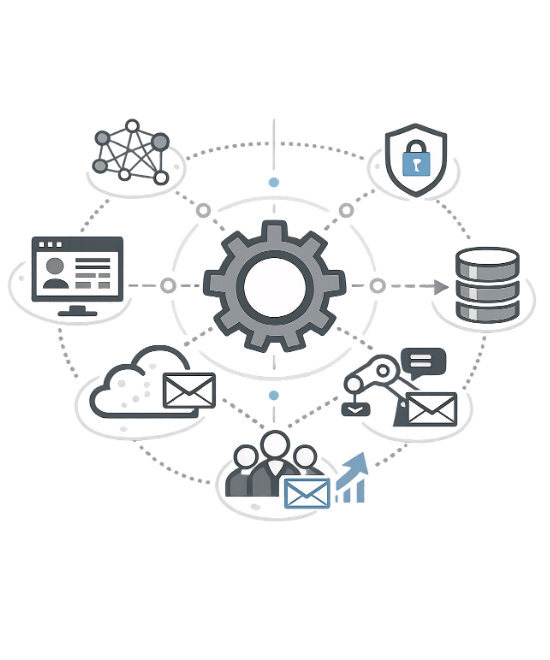
We don’t start with tools—we start with your GTM motion and design automation around how your revenue engine actually operates. Instead of automating isolated tasks, we build decision-driven systems that trigger the right actions at the right time. Our approach focuses on creating connected workflows across your entire stack, ensuring data, processes, and execution move seamlessly together. The goal isn’t to optimize effort—it’s to remove unnecessary effort entirely, so your team operates within a system that runs consistently at scale. 

Frequently Asked Questions

What is GTM automation and why is it critical for scaling?
GTM automation is the process of designing systems that execute go-to-market activities—lead routing, outreach, follow-ups, pipeline updates, and reporting—without manual intervention. It connects your CRM, marketing automation, and sales tools into a unified execution layer. As teams scale, manual processes introduce delays, inconsistencies, and missed opportunities. Automation removes these dependencies by ensuring that every action is triggered based on predefined logic and real-time data. This creates consistency across the funnel and allows organizations to scale execution without proportionally increasing headcount.
How is GTM automation different from traditional marketing automation?
Traditional marketing automation focuses primarily on campaigns—email workflows, lead nurturing, and basic scoring. GTM automation goes beyond that by covering the entire revenue lifecycle, including sales workflows, CRM updates, pipeline progression, and cross-team handoffs. It integrates marketing, sales, and customer success into a single system where actions are interconnected. Instead of isolated automation within one function, GTM automation ensures that data and workflows flow seamlessly across the entire revenue engine. The result is a unified system that drives pipeline movement, not just campaign engagement.
What processes can be automated in a GTM system?
Almost every operational layer of a GTM motion can be automated. This includes lead capture, enrichment, scoring, routing, and assignment. Outreach sequences can be triggered based on behavior and engagement signals. CRM updates such as deal stages, activity logging, and task creation can happen automatically. Reporting and analytics can be generated in real time without manual effort. Even internal processes like approvals, alerts, and escalations can be system-driven. The goal is to remove repetitive and rule-based tasks, allowing teams to focus on strategic and revenue-generating activities.
Will automation reduce personalization in outreach?
When implemented correctly, automation actually enhances personalization rather than reducing it. Modern GTM systems use data such as firmographics, behavior, intent signals, and engagement history to tailor messaging dynamically. Instead of generic batch outreach, automation enables context-aware communication at scale. Messages can adapt based on where the prospect is in the buying journey and how they have interacted with previous touchpoints. This ensures that outreach feels relevant and timely while maintaining efficiency. The key is designing intelligent logic, not just automating volume.
How do you ensure data accuracy in an automated GTM system?
Data accuracy is achieved by minimizing manual input and enforcing structured data flows. Automation ensures that information is captured directly from source systems and updated in real time. Validation rules, standardized fields, and integration across tools prevent inconsistencies. Enrichment tools continuously enhance data quality with updated firmographic and behavioral insights. Regular monitoring and governance frameworks ensure that data remains clean and reliable. A well-designed system reduces human error and creates a single source of truth across the revenue organization.
How long does it take to implement GTM automation?
Implementation timelines depend on the complexity of your GTM motion and existing systems. Foundational automation such as lead routing, workflow triggers, and basic reporting can typically be implemented within a few weeks. More advanced systems involving multi-channel orchestration, deep integrations, and custom logic may take longer. The process usually begins with mapping your current workflows, identifying inefficiencies, and defining system architecture. Implementation is followed by testing, iteration, and optimization. GTM automation is not a one-time setup—it evolves continuously as your business grows.
How do you measure the success of GTM automation?
Success is measured through execution efficiency and revenue impact. Key metrics include speed-to-lead, which reflects how quickly prospects are engaged, and conversion rates across funnel stages. Pipeline velocity shows how efficiently deals move through the system. Additional indicators include reduction in manual effort, improved data accuracy, and increased consistency in execution. Ultimately, the goal is to create a predictable and scalable pipeline where performance is driven by system logic rather than individual effort.
Can GTM automation work with our existing tech stack?
Yes, GTM automation is designed to integrate with your existing tools rather than replace them entirely. Most systems can be connected through APIs, native integrations, or middleware solutions. The focus is on creating a unified workflow across CRM platforms, marketing automation tools, and data sources. In many cases, organizations already have the right tools but are not using them effectively. Automation unlocks the full potential of your stack by connecting systems and ensuring data flows seamlessly. Changes to the stack are only recommended when they significantly improve performance or scalability.

Let’s Collaborate with Us!

From an early stage start-up’s growth strategies to helping existing businesses, we have done it all! The results speak for themselves. Our services work.