
Supply chain

Why Enterprises Are Rebuilding Supply Chain Operations

Traditional supply chain environments were designed for predictable operational cycles.
Modern enterprises are now prioritizing supply chain ecosystems that can:

Predict disruptions proactively
Automate operational workflows
Improve inventory intelligence
Optimize logistics dynamically
Provide operational visibility
Improve distributed responsiveness

What we support

Supply Chain Planning & Design

  • Network design
  • Scenario modeling
  • Demand and inventory planning                support
  • Procurement and supplier planning     workflows
  • Reporting and analytics support

This maps well to Coupa and broader planning layers

Product Lifecycle & Supplier Collaboration

  • BOM/change-process support
  • Supplier collaboration workflows
  • Product data/process coordination
  • Engineering-to-supply-chain                  handoffs
  • Lifecycle governance support

This maps to Windchill/PLM-style environments.

Warehouse & Logistics Operations

  • Warehouse process analysis
  • WMS support
  • Inventory visibility
  • Picking/packing/shipping workflow         optimization
  • Transportation/logistics process             support

This maps to Manhattan and Infor.

Order Management & B2B Integration

  • Order orchestration support
  • Partner onboarding flows
  • EDI/B2B integration support
  • Inventory and fulfillment integrations
  • Exception handling and transaction          visibility

This maps strongly to IBM Sterling and Manhattan OMS.

1 Supply Chain Planning & Design
2 Product Lifecycle & Supplier Collaboration
3 Warehouse, Fulfillment & Logistics Operations
4 Order Management & B2B Integration
5 Modernization & Workflow Engineering

Supply Chain Planning & Design

Modern supply chain planning requires connected operational intelligence capable of improving forecasting accuracy, inventory visibility, procurement coordination, and network efficiency across enterprise ecosystems

✓ Network design
✓ Scenario modeling
✓ Demand and inventory planning support
✓ Procurement and supplier planning workflows
✓ Reporting and analytics support

Product Lifecycle & Supplier Collaboration

Efficient product lifecycle management requires seamless coordination between engineering, procurement, suppliers, manufacturing, and operational teams throughout the product journey.

✓ BOM/change-process support
✓ Supplier collaboration workflows
✓ Product data/process coordination
✓ Engineering-to-supply-chain handoffs
✓ Lifecycle governance support

Warehouse, Fulfillment & Logistics Operations

Modern warehouse and logistics operations require intelligent fulfillment ecosystems capable of improving inventory visibility, operational throughput, transportation coordination, and warehouse efficiency across distributed supply chain environments.

✓ Warehouse process analysis
✓ WMS support
✓ Inventory visibility
✓ Picking/packing/shipping workflow optimization
✓ Transportation/logistics process support

Order Management & B2B Integration

Modern enterprise operations require connected order management ecosystems capable of coordinating inventory, fulfillment, partner communication, and transaction visibility across complex supply chain networks.

✓ Order orchestration support
✓ Partner onboarding flows
✓ EDI/B2B integration support
✓ Inventory and fulfillment integrations
✓ Exception handling and transaction visibility

Modernization & Workflow Engineering

Modern supply chain transformation requires more than operational support — it demands intelligent workflow modernization, process digitization, and scalable operational engineering across enterprise ecosystems.

✓ Internal workflow digitization
✓ Operational dashboards
✓ Support automation
✓ QA/UAT support
✓ Enhancement backlogs and release coordination

Industries We Support

We help organizations build connected supply chain ecosystems focused on operational visibility, fulfillment efficiency, inventory intelligence, logistics coordination, and workflow modernization across complex enterprise environments.

Pharma
Supply chain operations within pharmaceutical ecosystems require compliance-sensitive workflows, inventory traceability, operational continuity, and high levels of coordination across suppliers, warehouses, distributors, and healthcare networks.

Our support capabilities focus on:
→ Supply continuity
→ Batch & inventory visibility
→ Compliance-oriented workflows
→ Warehouse & distribution coordination
→ Partner ecosystem management
Retail
Retail and eCommerce supply chains are increasingly driven by omnichannel fulfillment, inventory visibility, order orchestration, returns management, and customer delivery expectations.

Retail transformation focus:
→ Omnichannel fulfillment coordination
→ Inventory visibility systems
→ Order routing optimization
→ Warehouse-store synchronization
→ Returns & fulfillment workflows
→ Customer fulfillment intelligence
→ Demand & inventory synchronization
→ Last-mile delivery optimization
Logistics / 3PL
Logistics operations require connected transportation visibility, warehouse throughput optimization, partner integration, and scalable operational coordination across distributed fulfillment ecosystems.

We support logistics-focused enterprises through:
→ Shipment visibility workflows
→ Transportation coordination support
→ Warehouse throughput optimization
→ Partner network integrations
→ Operational analytics visibility
→ Logistics workflow modernization
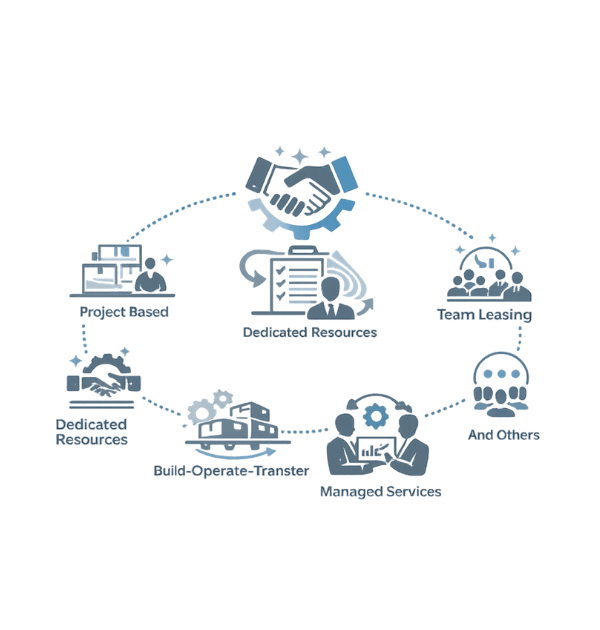
Engagement models

This section plays a critical role in enterprise qualification because it helps organizations, consulting partners, and vendor onboarding teams clearly understand the type of operational support, delivery flexibility, and transformation capability available across supply chain ecosystems.

Specialist staffing
Project-based delivery
Managed support / AMS-style support
Internal workflow modernization
Enhancement Support
Techno-functional consulting support
Implementation PMO / BA / QA support

Platform-Aligned Capability

Delivery Approach

Our delivery model is designed to support operational stability, transformation scalability, and long-term optimization.


Why Enterprises & Consulting Partners Choose Us

Modern supply chain transformation requires more than staffing support or isolated implementation services.

Technofunctional mindset beyond CV forwarding
Flexible staffing & delivery models
Capability across projects, support & modernization
Strong focus across pharma, retail & logistics
Enterprise workflow & operational understanding

Frequently Asked Questions

What is digital supply chain transformation?
Digital supply chain transformation is the process of modernizing traditional supply chain operations using technologies such as Artificial Intelligence, cloud platforms, automation systems, predictive analytics, IoT-enabled monitoring, and real-time operational dashboards. Instead of relying on disconnected workflows and manual processes, businesses are now building connected digital ecosystems that improve procurement visibility, warehouse efficiency, logistics coordination, inventory management, and decision-making. Modern supply chain transformation helps organizations become more agile, scalable, data-driven, and operationally resilient in rapidly changing market environments.
How does AI improve supply chain management?
Artificial Intelligence helps enterprises make smarter and faster operational decisions across procurement, warehousing, logistics, forecasting, and inventory management. AI-powered systems analyze historical trends, customer demand patterns, supplier performance data, and operational activities to predict disruptions, optimize inventory levels, improve delivery planning, and automate repetitive workflows. This enables businesses to reduce operational inefficiencies, improve forecasting accuracy, minimize inventory risks, and create more responsive supply chain environments capable of adapting to market fluctuations in real time.
Why is real-time supply chain visibility important for enterprises?
Real-time supply chain visibility allows organizations to monitor inventory movement, logistics operations, procurement activities, warehouse performance, supplier coordination, and fulfillment processes through centralized operational dashboards. This visibility helps leadership teams identify delays, operational bottlenecks, inventory shortages, and transportation inefficiencies before they impact business performance. With access to live operational intelligence, enterprises can make proactive decisions, improve customer experience, optimize logistics planning, and maintain better control across complex supply chain networks.
What are the major challenges businesses face in supply chain operations today?
Modern supply chains often struggle with disconnected systems, delayed operational reporting, inventory inaccuracies, inefficient procurement workflows, rising logistics costs, and limited visibility across suppliers and distribution networks. As businesses scale across multiple operational locations and fulfillment channels, these challenges become more difficult to manage using traditional systems. Organizations also face increasing pressure to improve delivery speed, operational efficiency, and forecasting accuracy while reducing costs and managing supply chain risks. Digital transformation helps address these operational challenges through automation, analytics, and connected technology ecosystems.
What technologies are commonly used in modern supply chain solutions?
Modern supply chain solutions use a combination of advanced enterprise technologies including Artificial Intelligence, Machine Learning, cloud computing, IoT-enabled tracking systems, RFID automation, Warehouse Management Systems (WMS), Transportation Management Systems (TMS), predictive analytics platforms, and ERP integrations. These technologies help businesses automate operations, improve inventory visibility, optimize transportation planning, monitor warehouse performance, and generate real-time operational insights. Together, these systems create intelligent supply chain ecosystems capable of improving operational speed, scalability, and business decision-making.
How does smart warehouse management improve operational efficiency?
Smart warehouse management improves operational efficiency by introducing automation, real-time tracking, intelligent inventory systems, barcode scanning, RFID technology, and connected operational workflows into warehouse environments. Traditional warehouses often face challenges related to stock inaccuracies, delayed fulfillment, inefficient movement tracking, and manual operational dependency. Smart warehouse systems streamline these operations by improving inventory accuracy, reducing manual errors, accelerating order processing, optimizing warehouse space utilization, and enabling real-time inventory synchronization across multiple operational channels.
Why is predictive analytics important in supply chain management?
Predictive analytics enables businesses to forecast operational trends, inventory requirements, customer demand fluctuations, logistics risks, and procurement cycles using historical and real-time data. Instead of reacting to disruptions after they occur, organizations can proactively identify operational risks and make informed decisions earlier. Predictive analytics improves supply chain planning, inventory optimization, transportation coordination, and operational forecasting while reducing waste, delays, and unnecessary operational costs. Enterprises using predictive intelligence are better positioned to improve agility, efficiency, and long-term business scalability.
How can businesses future-proof their supply chain operations?
Businesses can future-proof their supply chain operations by investing in intelligent automation, AI-powered forecasting, cloud-native infrastructure, connected logistics ecosystems, and real-time operational visibility platforms. Future-ready supply chains are designed to adapt quickly to market changes, customer expectations, supplier disruptions, and operational risks. Organizations are increasingly focusing on scalable digital infrastructure, predictive analytics, smart warehousing, ERP integrations, and automated procurement systems to improve resilience and operational performance. A modern digital supply chain not only improves current operational efficiency but also prepares businesses for long-term growth and evolving industry demands.

Let’s Collaborate with Us!

From an early stage start-up’s growth strategies to helping existing businesses, we have done it all! The results speak for themselves. Our services work.