
CRM Automation as a Revenue Operations Engine
We design CRM systems that move beyond data capture to orchestrate customer interactions, sales execution, and operational workflows — in real time and at scale.
The Real Problem with CRM
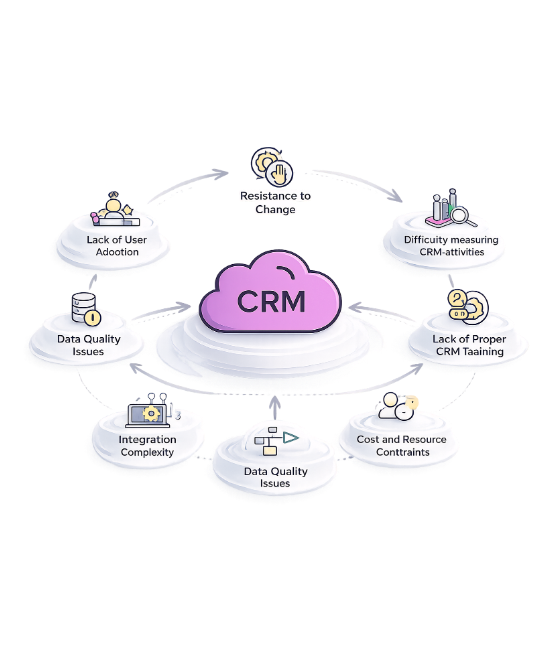
In most organizations, CRM failure is not a technology issue — it is a systems design problem. Processes are layered on top of tools without standardization, resulting in fragmented pipelines, inconsistent data, and low adoption.
Automation Architecture
We architect CRM automation across three critical layers:
Lifecycle Orchestration
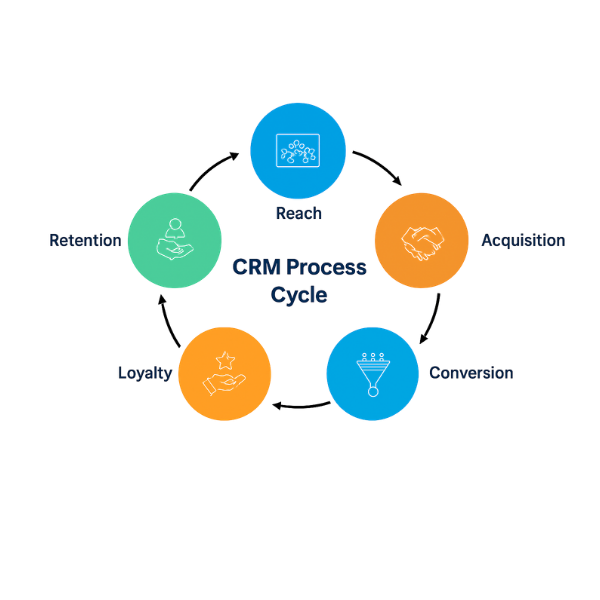
We design automation across the entire customer lifecycle — ensuring that each stage triggers the next with precision.
Operational Leverage

System Integration Thinking

- We don’t treat CRM as a standalone tool. It is positioned within a broader revenue architecture — integrating marketing automation, support systems, analytics platforms, and communication tools.
- This creates a closed-loop system where data flows continuously, enabling visibility, accountability, and optimization across the entire revenue lifecycle.
- It also enables unified reporting and real-time insights, allowing leadership to make faster, data-driven decisions with complete visibility across the revenue funnel.
Our Execution Approach
Our approach begins with decomposing your current workflows — identifying inefficiencies, dependencies, and decision gaps. We then redesign these processes into structured, automated systems within the CRM.
Frequently Asked Questions
Why do CRM automation initiatives fail at scale?
Another common issue is the absence of governance and ownership, leading to uncontrolled changes and fragmented workflows. Organizations often focus on tools instead of process design, which limits scalability. Without proper data structure and lifecycle definition, automation cannot function effectively. Over time, this results in poor adoption, unreliable reporting, and reduced trust in the system.
How do you ensure CRM adoption across teams?
We focus on embedding automation into user journeys rather than adding extra steps. This ensures the system supports work instead of interrupting it.
Clear data structures and intuitive interfaces make it easier for teams to use consistently. Training and onboarding are aligned with actual use cases, not generic features.
What is the role of data in CRM automation?
We design data models that enforce consistency across all stages of the customer lifecycle. Validation rules and structured inputs ensure high data quality from the start.
Good data enables accurate segmentation, better targeting, and reliable forecasting. It also allows automation to function predictably and at scale.
How does CRM automation improve pipeline predictability?
Real-time tracking provides visibility into deal progression, bottlenecks, and conversion points. This allows leadership to monitor pipeline health continuously.
Automation also standardizes data capture at each stage, improving reporting accuracy. As a result, forecasting becomes more reliable and less dependent on assumptions.
Can CRM automation scale across multiple regions or teams?
Centralized data models ensure consistency, while flexible workflows allow customization where needed.
This approach maintains control without limiting scalability. It also ensures that reporting and performance metrics remain aligned globally.
What differentiates advanced CRM automation from basic setup?
It defines how leads move through stages, how actions are triggered, and how outcomes are measured.
This creates a structured system that guides user behavior and enforces consistency.
Advanced automation is aligned with revenue operations, ensuring measurable business impact.
How do you approach integration with existing systems?
APIs and middleware are used to synchronize data in real time, reducing duplication and delays.
The goal is to position CRM as the central execution layer, not a standalone tool.
This creates a unified view of customer interactions across touchpoints.
How do you measure success in CRM automation?
We also track improvements in operational efficiency, data accuracy, and process consistency. Automation should reduce manual effort while improving decision-making quality.Over time, it should contribute to predictable revenue growth and better alignment across teams.
Let’s Collaborate with Us!
From an early stage start-up’s growth strategies to helping existing businesses, we have done it all! The results speak for themselves. Our services work.