Build Scalable, Production-Grade Digital Products
Engineer high-performance applications with strong system architecture, clean code, and cloud-ready infrastructure designed for long-term scale.
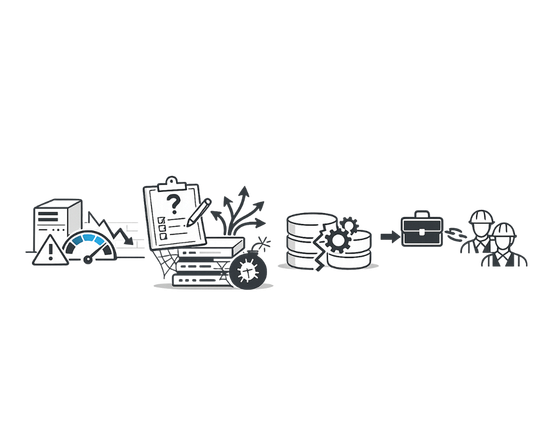
Why Most Products Fail at Scale
Most failures are architectural—not conceptual.
What Modern Product Development Requires
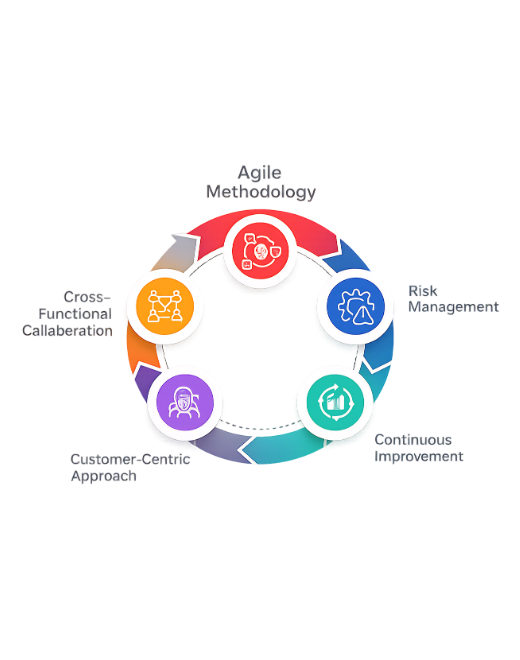
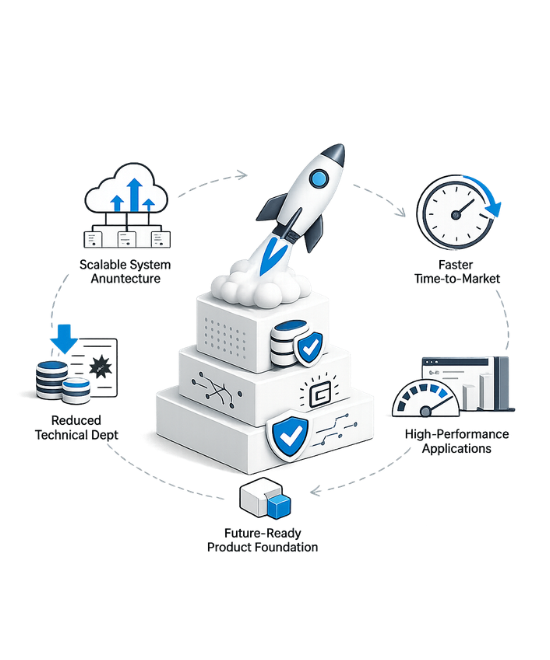
TechAIVV engineers digital products using an architecture-first approach where every layer—from user experience and application services to data, cloud infrastructure, and security—is designed for scalability, resilience, and long-term adaptability. By combining engineering excellence with continuous operational insights, we enable products to evolve efficiently, reduce technical debt, and support changing business requirements without repeated re-engineering.
CORE CAPABILITIES
Every successful product begins with a clear understanding of business objectives, user expectations, and technical feasibility. TechAIVV transforms product ideas into structured engineering roadmaps that reduce delivery risk and establish scalable implementation strategies.
Product Discovery & Requirement Engineering
➤ Map user journeys and edge cases
➤ Validate feasibility (technical + cost + scalability)
System Architecture & Design
Full-Stack Development
➤ Backend: scalable APIs and services
➤ Database: optimized schema and indexing
➤Cloud: deployment-ready infrastructure
DevOps & Deployment
➤ CI/CD pipelines for continuous delivery
➤ Containerization (Docker, Kubernetes)
➤Cloud platforms (AWS, GCP, Azure)
PRODUCT DEVELOPMENT PROCESS
Product Definition
Architecture Design
Development
Testing & QA
Deployment
Scaling
Built on Strong Engineering Foundations
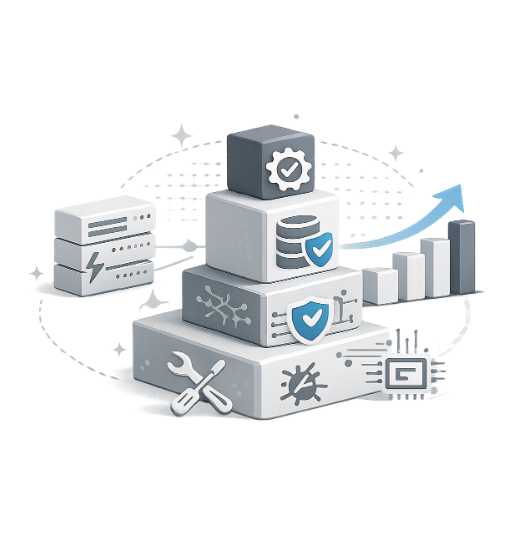
TechAIVV develops products using engineering principles that prioritize long-term sustainability over short-term delivery. Every solution is designed to remain scalable, maintainable, secure, and resilient throughout its lifecycle.
Our engineering philosophy emphasizes:
- Modular System Design.
- Cloud-Native Architecture.
- Scalability by Design.
- Fault Tolerance & Resilience.
- Observability & Monitoring.
- Clean Engineering Practices.
- Performance Optimization.
This architecture-first methodology minimizes technical debt while enabling organizations to deliver new capabilities without disrupting existing systems.
Where This Approach Works Best
Our strategies are adaptable across industries, with tailored execution for each:

SaaS Platforms
AI/ML Products
Enterprise Applications
Startups / MVPs
What You Achieve
Frequently Asked Questions
What is modern product development?
Products are designed to evolve over time through structured iterations, guided by real user data and performance insights.
This approach ensures that every component — from frontend to infrastructure — is aligned with long-term growth and adaptability.
It also emphasizes automation, testing, and performance optimization as core principles. Instead of one-time delivery, modern product development creates a continuous lifecycle of improvement.
How is product development different from traditional development?
Modern product development, on the other hand, prioritizes building systems that can adapt, scale, and evolve with changing business needs.
It integrates feedback loops, performance monitoring, and continuous updates into the development lifecycle. The focus shifts from “building and shipping” to “building, measuring, and improving.” This ensures that products remain relevant, efficient, and competitive over time.
What are the key stages of product development?
This is followed by design, where user experience and system architecture are planned.
Development involves building the product using scalable and maintainable code structures.
Testing ensures quality, performance, and reliability before release.
Deployment makes the product available to users, while continuous improvement ensures ongoing optimization.
Each stage is interconnected, forming a structured and iterative process.
How do you ensure scalability in product development?
We design systems that can handle increasing users, data, and workloads without performance degradation.
Microservices, containerization, and distributed systems are often used to enable flexibility and growth.
Performance testing and monitoring ensure that systems remain stable under load. Scalable design also reduces the need for major re-engineering as the product grows.
What role does user feedback play in product development?
It helps identify usability issues, feature gaps, and opportunities for enhancement.
Feedback is collected through analytics, user interactions, and direct input.
This data is then used to prioritize updates and refine product features.
By aligning development with real user needs, products become more relevant and effective.
How do you reduce technical debt?
We avoid shortcuts that may speed up delivery but create long-term complexity.
Regular code reviews, refactoring, and testing ensure maintainability.
Proper documentation and modular design also help in managing complexity. This approach ensures that the system remains stable, flexible, and easy to scale over time.
Can product development support rapid iteration?
Features can be developed, tested, and deployed independently without affecting the entire system.
Continuous integration and deployment pipelines enable faster releases. This allows teams to respond quickly to market changes and user feedback. Rapid iteration ensures that products remain competitive and continuously improve.
How do you ensure product performance?
We conduct performance testing to simulate real-world usage scenarios.
Monitoring tools are used to track system behavior and identify bottlenecks. Continuous optimization ensures that the product performs reliably under different conditions. This results in a smooth user experience and high system efficiency.
Let’s Collaborate with Us!
From an early stage start-up’s growth strategies to helping existing businesses, we have done it all! The results speak for themselves. Our services work.