Systems Should Work Together. Not Around Each Other.
Modern products rely on multiple systems—CRMs, APIs, data platforms, third-party tools. Without structured system integration, these systems operate in silos, creating delays, inconsistencies, and operational risk.
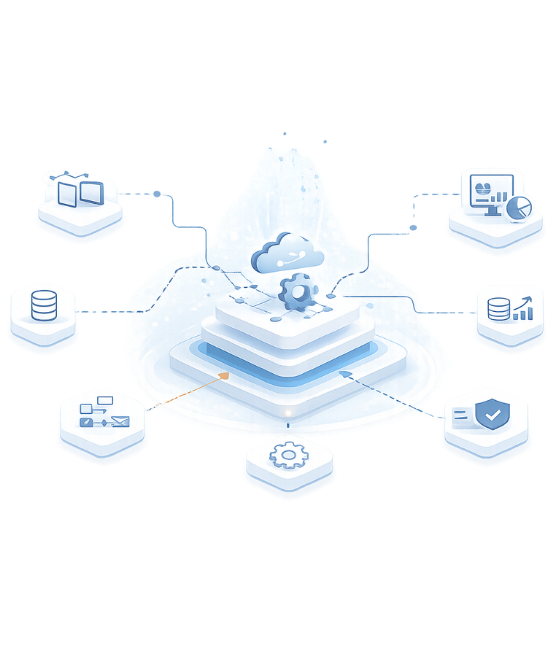
Disconnected Systems Create Invisible Failures
- Most systems are integrated at a surface level—basic API connections, manual data syncs, or isolated workflows
- Initially, these integrations work but begin to break as system complexity increases
- Data does not sync in real time across systems
- Dependencies between systems become fragile and unreliable
- Workflows fail silently without immediate visibility
- These issues are not always visible but directly impact product performance
- Decision-making is affected due to inconsistent or outdated data
- User experience degrades as systems become unreliable
- Without structured integration architecture, failures are not obvious
- Systems don’t fail loudly—they fail quietly and continuously
Integration Architecture That Scales with Your Product
TechAIVV engineers integration architectures that establish consistent data movement, resilient service communication, and controlled dependency management across distributed environments. By embedding integration into the system architecture rather than treating it as a collection of individual connections, organizations gain reliable interoperability, operational visibility, and the flexibility to scale without increasing architectural complexity.
Integration as a Controlled System

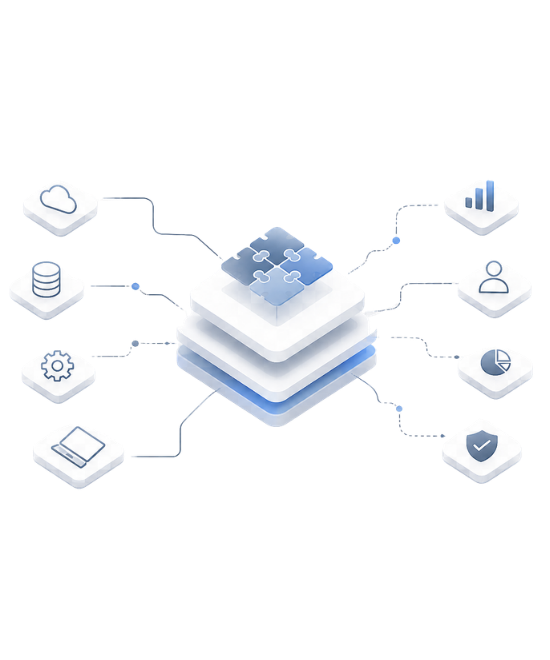
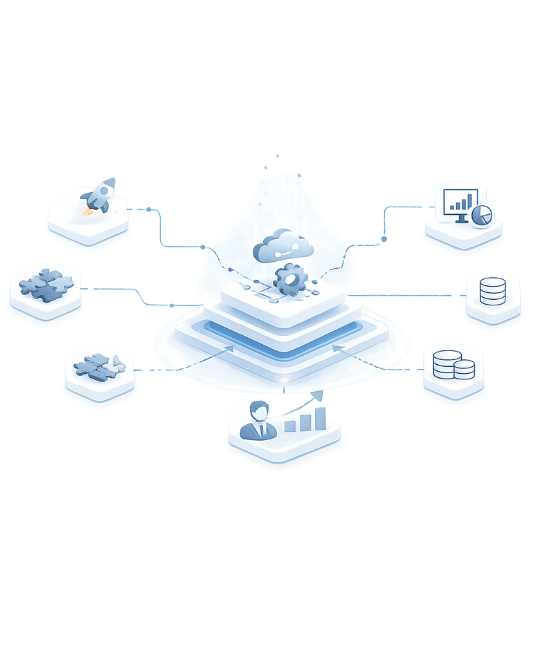
TechAIVV designs integration architectures where data movement, service communication, and business workflows are orchestrated through a centralized integration layer that ensures consistency, reliability, and operational visibility across the enterprise.
Information is captured from applications, cloud platforms, APIs, and event-driven services before being validated, transformed, and routed according to defined business rules. Every interaction is monitored throughout the integration lifecycle, enabling continuous visibility into data movement, system dependencies, and operational performance.
By combining intelligent orchestration, real-time monitoring, and policy-driven processing, TechAIVV enables organizations to maintain synchronized systems, resilient integrations, and predictable operational behavior. As business requirements evolve, the integration architecture adapts without introducing unnecessary complexity, ensuring the ecosystem remains scalable, observable, and engineered for continuous growth.
Where Integration Creates Impact
From Fragile Connections to Reliable Systems
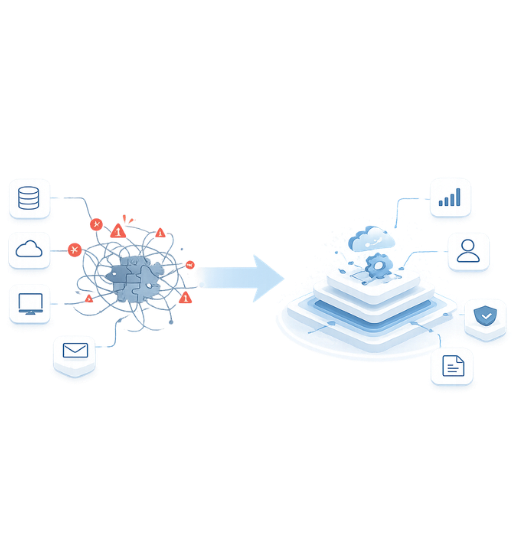
TechAIVV establishes integration architectures that improve system resilience, operational visibility, and data consistency across the enterprise. Rather than responding to integration failures after they occur, organizations gain a controlled environment where communication between applications is standardized, monitored, and continuously optimized.
As integration evolves from isolated implementations to an architectural capability, systems begin to operate as a unified ecosystem rather than a collection of independently connected applications. Data flows become consistent, services communicate predictably, and dependencies are governed through structured integration models instead of ad hoc connections.
Built for Products with Growing Complexity
Frequently Asked Questions
What does system integration mean in product engineering?
How is your approach different from basic API integrations?
Can you integrate both modern and legacy systems?
How do you ensure real-time data synchronization across systems?
What challenges do businesses face without proper system integration?
How do you handle failures and errors in integrations?
How long does it take to implement a system integration solution?
What outcomes can we expect from a well-designed integration system?
Let’s Collaborate with Us!
From an early stage start-up’s growth strategies to helping existing businesses, we have done it all! The results speak for themselves. Our services work.