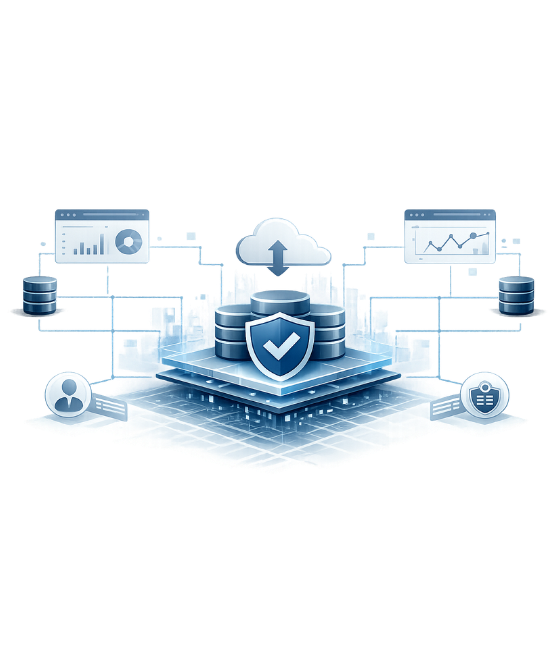
Your Data Stack Isn’t Broken. It’s Uncoordinated.
Informatica enables a coordinated data system where ingestion, transformation, governance, and consumption operate as a single controlled layer.
The Gap Between Data Availability and Data Reliability

Modern enterprises generate and move enormous volumes of data across cloud platforms, applications, and business systems. However, having access to data does not guarantee that it is accurate, consistent, or trusted for business-critical decisions. Fragmented integration pipelines, inconsistent governance, and disconnected quality controls often create an architectural gap where data is available but lacks reliability.
TechAIVV helps organizations close this gap by implementing Informatica-based data management solutions that unify integration, governance, metadata, and data quality into a centralized enterprise framework. Instead of managing isolated processes, organizations gain a governed data ecosystem where information remains consistent, traceable, and business-ready across every platform.
Data Stops Being a Risk Layer
A Structured Data Control Plane
Our capabilities include:
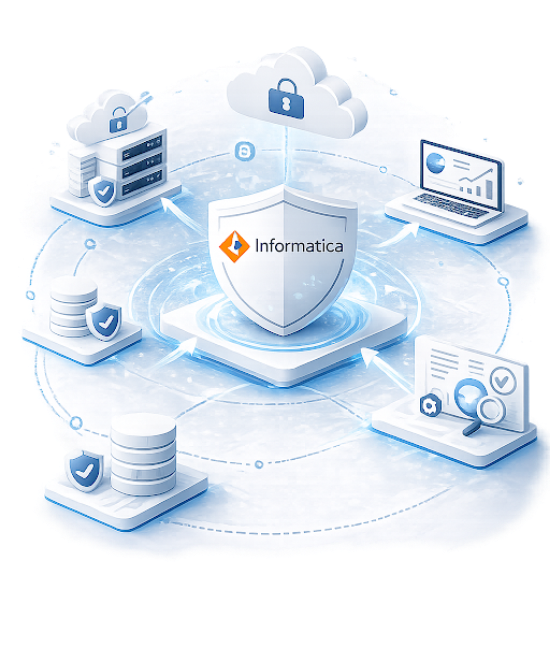
Core Informatica Stack
TechAIVV leverages Informatica’s modern cloud-native capabilities to build secure, scalable, and governed enterprise data platforms.
Cloud Integration (IDMC)
Scalable, cloud-native pipelines with real-time and batch processing
Data Quality Engineering
Rule-based validation, anomaly detection, and profiling
Master Data Management
Golden records across customer, product, and financial domains
Metadata & Lineage
End-to-end visibility into data flow and dependencies
Where Informatica Stops Being a Tool and Starts Driving Systems
As organizations scale, enterprise data becomes foundational to every business operation. Informatica evolves beyond an integration platform into a strategic capability that supports governance, operational resilience, AI readiness, and enterprise-wide decision-making.
From Pipelines to Data Fabric
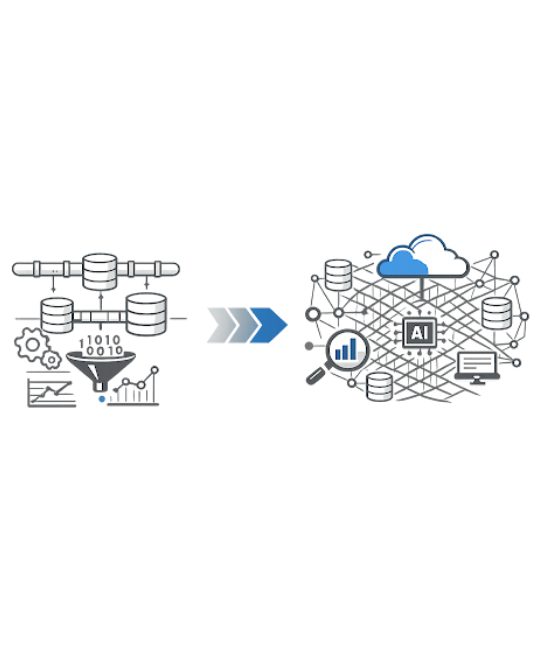
TechAIVV helps organizations transition from traditional ETL architectures to intelligent data fabric environments powered by Informatica. A modern data fabric unifies integration, governance, metadata, quality, and data access into a connected enterprise platform that continuously adapts to changing business requirements.
Rather than maintaining fragmented pipelines, organizations operate within an intelligent ecosystem where metadata drives automation, governance is enforced in real time, and enterprise data remains accessible, secure, and trusted.
This approach reduces operational complexity, improves scalability, strengthens governance, and enables real-time analytics, AI, and enterprise-wide digital transformation.
Frequently Asked Questions
What is AWS mainly used for?
AWS also supports modern architectures such as microservices, serverless, and containerized applications. Its flexibility allows businesses to build, deploy, and scale solutions quickly without managing physical infrastructure. This makes AWS a foundation for digital transformation and innovation.
Why do companies choose AWS?
AWS provides high availability through multiple regions and availability zones, ensuring minimal downtime. It also allows organizations to customize infrastructure based on performance and cost requirements. This combination of flexibility and robustness makes AWS a preferred choice for enterprises and startups alike.
Is AWS good for high-performance applications?
These capabilities enable fast processing, low latency, and efficient handling of large-scale workloads. AWS also supports auto-scaling and load balancing, ensuring consistent performance even under heavy demand. This makes it ideal for applications requiring speed, reliability, and scalability.
Does AWS support global scaling?
AWS also supports content delivery through edge locations, enabling fast data access across geographies. Organizations can scale their applications globally without redesigning their architecture. This makes it suitable for businesses aiming for international expansion.
Can AWS reduce infrastructure costs?
Additionally, features like auto-scaling, reserved instances, and cost monitoring tools help optimize spending. By eliminating the need for physical hardware and maintenance, AWS reduces capital expenditure and operational overhead. Proper architecture design further enhances cost efficiency.
Is AWS suitable for complex architectures?
With services like Kubernetes (EKS), Lambda, and API Gateway, organizations can build highly modular and scalable systems. AWS also provides tools for orchestration, monitoring, and integration across services. This makes it ideal for handling complex, enterprise-level applications.
How secure is AWS?
AWS complies with global security standards and certifications, making it suitable for regulated industries. It also follows a shared responsibility model, ensuring both AWS and the customer maintain security. Continuous monitoring and updates help protect against evolving threats.
Do you provide AWS services?
We help design cloud-native systems, optimize workloads, and implement best practices for security and governance. Continuous monitoring and improvement ensure your AWS environment delivers long-term value.
Let’s Collaborate with Us!
From an early stage start-up’s growth strategies to helping existing businesses, we have done it all! The results speak for themselves. Our services work.