Microsoft Fabric — One Platform for All Your Data Needs
Unify data integration, analytics, and business intelligence into a single, seamless experience with Microsoft Fabric.
From Raw Data to Business Insight — In One Place
Microsoft Fabric unifies data engineering, data integration, data science, real-time analytics, and business intelligence within a single enterprise platform. We help organizations implement Microsoft Fabric to eliminate fragmented data ecosystems, simplify data operations, and accelerate AI-driven decision-making through a connected, scalable, and governed data environment.
Everything Connected, Seamlessly
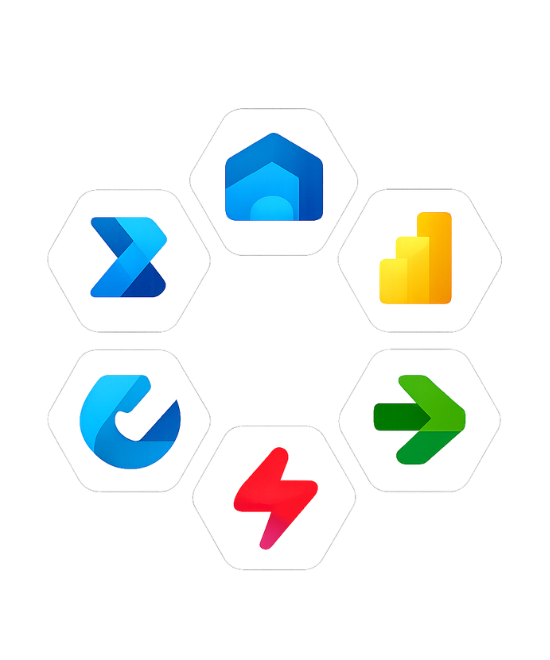
One Platform, Multiple Roles
Microsoft Fabric empowers data professionals and business users to collaborate on a shared enterprise data foundation. TechAIVV helps organizations build collaborative environments where engineering, analytics, AI, and business intelligence teams work together using trusted and consistent data.
Engineers build and manage pipelines
Design, orchestrate, and maintain scalable data pipelines that ensure reliable data ingestion, transformation, and delivery across systems.
Business users access insights
Consume real-time, easy-to-understand insights through dashboards and reports, enabling faster, data-driven decisions without technical dependency.
Data scientists develop models
Build, train, and deploy machine learning models to generate predictions, uncover patterns, and drive data-driven decision-making.
Complex Capabilities, Simplified

Microsoft Fabric simplifies enterprise data management by bringing data engineering, analytics, governance, AI, and business intelligence together within a unified cloud-native platform. Instead of managing multiple disconnected tools and complex integrations, organizations operate from a single, consistent environment that improves productivity, collaboration, and operational efficiency.
TechAIVV helps organizations maximize Microsoft Fabric by designing scalable architectures, modernizing legacy data environments, and implementing governance frameworks that improve data quality, consistency, and enterprise-wide accessibility.
What Fabric Enables
Microsoft Fabric provides a unified data foundation that enables organizations to modernize enterprise data operations while accelerating digital transformation initiatives.
From Data Chaos to Clarity
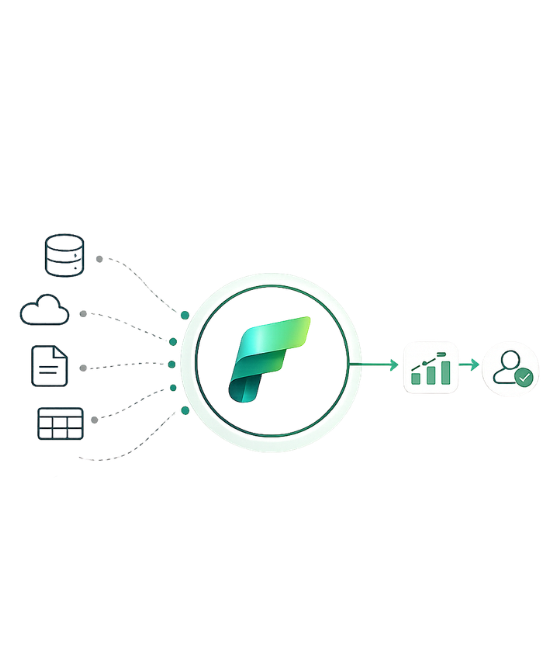
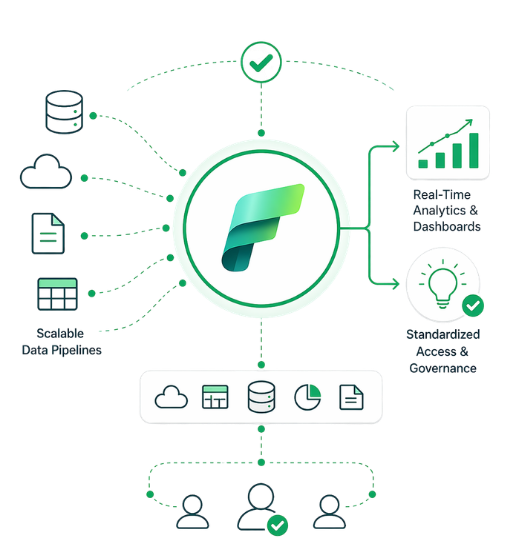
We help you implement Microsoft Fabric by aligning your data strategy with its unified capabilities. From building scalable data pipelines to enabling real-time analytics and interactive dashboards, we ensure your data ecosystem is streamlined, governed, and optimized for performance.
This enables your organization to move beyond fragmented data systems and operate on a single, consistent data foundation — driving faster insights, better decisions, and measurable business outcomes. By unifying data across sources and standardizing access, it ensures that every team works with the same trusted information, eliminating inconsistencies and delays.
Frequently Asked Questions
What is Microsoft Fabric?
Built on a shared data foundation, Fabric enables organizations to ingest, process, analyze, and visualize data seamlessly. It supports real-time and batch processing while maintaining governance and scalability. This makes it a powerful platform for building modern, data-driven systems.
How is Fabric different from other data platforms?
With a shared data layer and consistent user experience, teams can collaborate more effectively across functions. Unlike traditional platforms, Fabric ensures that data flows seamlessly between engineering, analytics, and BI. This integrated approach accelerates time-to-insight and simplifies operations.
Is Fabric suitable for real-time analytics?
By combining streaming data capabilities with analytics tools, Fabric ensures that insights are always up to date. This is particularly valuable for use cases such as operational monitoring, customer behavior analysis, and time-sensitive decision-making.
Does Fabric include data warehousing?
The integrated approach ensures that data warehousing works seamlessly with other components like pipelines and BI tools. This eliminates the need for separate systems and simplifies data architecture.
Who can use Microsoft Fabric?
Engineers can build pipelines, analysts can create reports, and business users can access insights — all on the same platform. This promotes collaboration and ensures that everyone works with consistent, reliable data.
Can Fabric integrate with existing systems?
Through connectors and APIs, it ensures that existing systems can be integrated without major disruption. This allows businesses to modernize their data infrastructure while leveraging current investments.
Is Fabric scalable?
Organizations can manage growing data volumes and increasing user demands efficiently. This ensures that the platform remains reliable and performant as business needs evolve.
Do you provide Fabric implementation services?
We ensure that your data platform is structured, scalable, and optimized for performance and governance. Continuous monitoring and improvements help deliver long-term value and adaptability.
Let’s Collaborate with Us!
From an early stage start-up’s growth strategies to helping existing businesses, we have done it all! The results speak for themselves. Our services work.