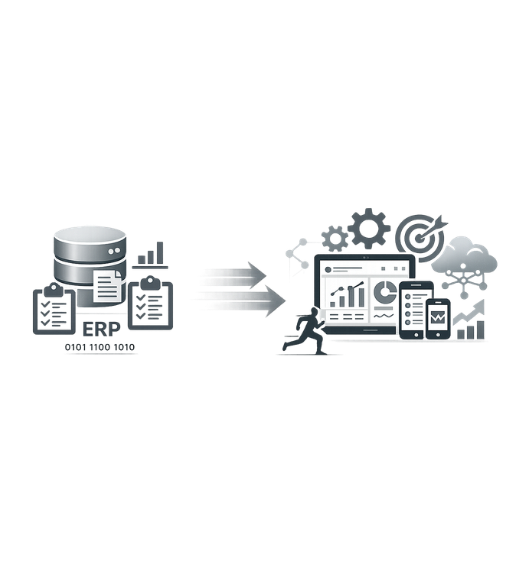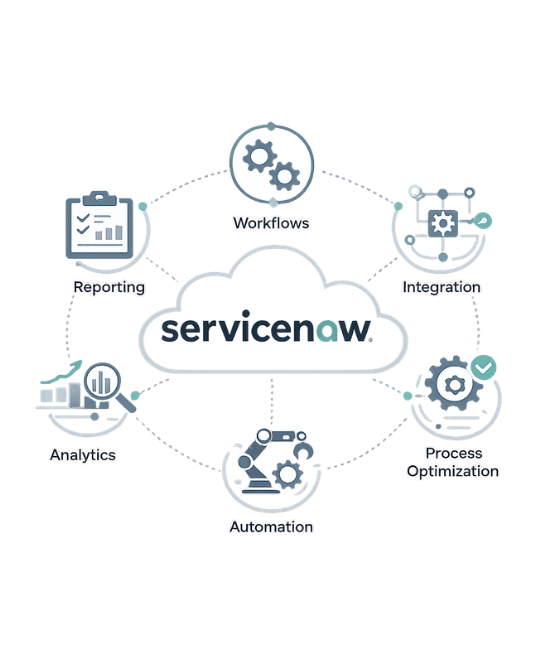
From Systems of Record to Systems of Action

 ERP Beyond Transactions 

  • Traditional ERP systems primarily focus on storing, managing, and organizing enterprise data across departments such as finance, operations, procurement, and human resources.
  • While these systems are essential for maintaining records and transactional consistency, they often rely heavily on manual coordination, disconnected workflows, and fragmented operational processes.
  • As businesses become more digital and fast-paced, organizations require platforms that not only manage information but also actively orchestrate work, automate decisions, and streamline operations in real time.
How ServiceNow Supports ERP Operations

Core Operational Capabilities

End-to-end workflow automation
Service request and ticket management
Process standardization across teams
Cross-department coordination
Real-time tracking of tasks and operations

From System of Record to System of Action

Traditional ERP systems primarily focus on storing, managing, and organizing enterprise data across departments such as finance, operations, procurement, and human resources. While these systems are essential for maintaining records and transactional consistency, they often rely heavily on manual coordination, disconnected workflows, and fragmented operational processes. As businesses become more digital and fast-paced, organizations require platforms that not only manage information but also actively orchestrate work, automate decisions, and streamline operations in real time.

Built for Enterprise Functions

Our ServiceNow Approach

From Processes to Performance

We implement ServiceNow as an extension of your ERP ecosystem, transforming manual processes into intelligent workflows. Our approach ensures smooth integration, faster adoption, and continuous optimization so your operations run efficiently at scale.

One Platform Across Departments

ServiceNow extends ERP capabilities by connecting IT, HR, finance operations, and customer service into a unified system. It ensures that every function operates with consistency, visibility, and efficiency — reducing silos and improving overall operational performance.

Workflow Meets ERP 

Connecting Processes Across the Business

ServiceNow integrates with ERP systems and enterprise tools to create a seamless flow of work across the organization.
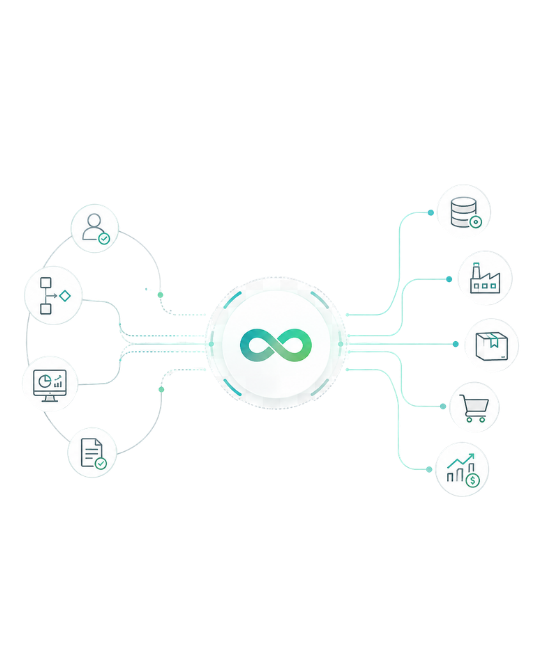
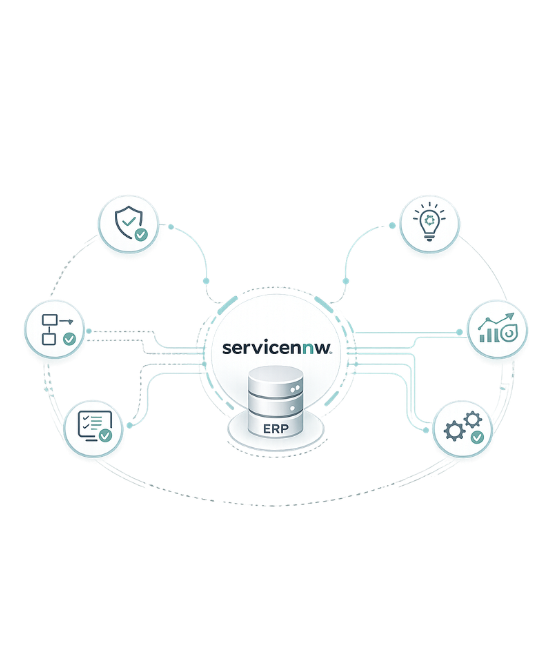
Integrates with ERP, CRM, and cloud systems
Automates approvals and task flows
Centralizes operational processes
Enables real-time collaboration across teams
Business Impact 

What ServiceNow Adds to ERP

  • Faster process execution
  • Reduced manual effort and delays
  • Improved service delivery
  • Greater visibility into operations
  • Consistent and scalable workflows
  • Improved cross-team collaboration
  • Standardized processes & governance
  • Faster issue resolution
  • Enhanced compliance & audit readiness
  • Optimized resource utilization

Frequently Asked Questions

What is ServiceNow in ERP context?
In the ERP context, ServiceNow functions as an intelligent workflow automation and operational orchestration platform that enhances and extends the capabilities of traditional ERP systems. While ERP platforms primarily focus on managing enterprise data, transactions, and core business records, ServiceNow helps organizations streamline how work actually moves across departments and systems. It connects processes, people, and enterprise applications into a unified workflow ecosystem, enabling faster execution, reduced manual intervention, and improved operational efficiency. ServiceNow acts as the operational layer that automates tasks, approvals, service requests, issue resolution, and cross-functional collaboration, helping organizations transform static ERP environments into more agile and responsive enterprise operations.


How is ServiceNow different from traditional ERP systems?
Traditional ERP systems are primarily designed to manage business data, transactions, financial records, supply chain operations, and enterprise resources within structured modules. While these systems are essential for maintaining operational consistency and centralized data management, they often rely on manual coordination between teams and disconnected operational workflows. ServiceNow differs by focusing on workflow automation, process orchestration, and service execution across the enterprise. Instead of simply recording activities, ServiceNow ensures that work moves intelligently and efficiently between departments, systems, and users. It automates approvals, escalations, notifications, and operational processes while providing real-time visibility into workflow performance. In many organizations, ServiceNow complements ERP systems by adding agility, automation, and connected operational intelligence.
Can ServiceNow integrate with ERP systems?
Yes, ServiceNow is designed to integrate seamlessly with ERP systems, CRM platforms, cloud applications, legacy systems, and various enterprise technologies. Through APIs, middleware, connectors, and integration frameworks, ServiceNow can connect with platforms such as SAP, Oracle, Salesforce, Microsoft Dynamics, and other enterprise ecosystems. These integrations allow organizations to synchronize data, automate workflows, and create connected operational experiences across departments and systems. By integrating ServiceNow with ERP platforms, businesses can eliminate manual handoffs, reduce operational silos, improve process efficiency, and enable real-time workflow orchestration across the enterprise. This creates a more unified and intelligent operational environment where systems and teams work together seamlessly.

Is ServiceNow only for IT services?
No, although ServiceNow initially gained popularity in IT Service Management (ITSM), it has evolved into a comprehensive enterprise workflow platform that supports multiple business functions beyond IT. Today, organizations use ServiceNow across HR operations, customer service, finance, legal processes, procurement, facilities management, security operations, and enterprise-wide workflow automation. The platform’s flexibility allows businesses to create customized workflows for various operational scenarios while maintaining consistency and governance across departments. ServiceNow’s low-code capabilities, automation features, and cloud-native architecture make it suitable for transforming both technical and non-technical business operations into streamlined digital workflows.

Can it automate business processes?
Yes, ServiceNow is specifically built to automate end-to-end business processes across enterprise functions. It enables organizations to automate repetitive tasks, approvals, ticketing systems, service requests, issue resolution workflows, onboarding processes, compliance activities, and operational procedures. Through workflow orchestration, AI-driven automation, and low-code development capabilities, ServiceNow helps businesses reduce manual effort, accelerate response times, and improve operational consistency. The platform also supports intelligent routing, automated notifications, escalations, and real-time tracking, ensuring that workflows move efficiently across teams and systems. By automating processes at scale, organizations can improve productivity, reduce operational bottlenecks, and enhance overall service delivery.
Is ServiceNow scalable for large enterprises?
Yes, ServiceNow is highly scalable and widely adopted by large global enterprises to manage complex operational environments and enterprise-wide workflows. Its cloud-native architecture is designed to support high transaction volumes, multiple business units, distributed teams, and global operations while maintaining performance, security, and reliability. ServiceNow enables organizations to standardize workflows across departments while remaining flexible enough to adapt to changing business requirements. As enterprises grow and operational complexity increases, the platform can scale seamlessly to support additional users, workflows, integrations, and automation capabilities without significant infrastructure limitations. This scalability makes ServiceNow suitable for both growing organizations and highly complex enterprise ecosystems.
Does it provide real-time visibility?
Yes, ServiceNow provides real-time visibility into workflows, operational processes, service requests, and enterprise activities through centralized dashboards, analytics, and reporting capabilities. Organizations can monitor workflow progress, identify bottlenecks, track service performance, and gain actionable insights into operational efficiency across departments. Real-time visibility helps leadership teams make faster decisions, improve resource allocation, and proactively address operational issues before they impact business performance. ServiceNow also supports AI-driven analytics and predictive insights, enabling organizations to optimize workflows continuously and improve service outcomes through data-driven operational intelligence.
Do you provide ServiceNow implementation services?
Yes, we provide comprehensive ServiceNow implementation, integration, customization, and support services designed to help organizations maximize the value of their workflow automation initiatives. Our services include operational assessment, workflow design, platform setup, integration with enterprise systems, process automation, customization, testing, deployment, and user training. We work closely with organizations to ensure that ServiceNow aligns with business processes, operational goals, and long-term transformation strategies. Beyond implementation, we also provide ongoing optimization, workflow enhancements, governance support, analytics improvements, and continuous platform management to ensure the system remains scalable, efficient, and aligned with evolving business needs. Our focus is not only on deploying ServiceNow successfully but also on enabling sustainable operational transformation across the enterprise.

Let’s Collaborate with Us!

From an early stage start-up’s growth strategies to helping existing businesses, we have done it all! The results speak for themselves. Our services work.